
Thursday, August 7, 2008

Tuesday, July 29, 2008
3DLanguage New Versions Available (Spanish - Ordering; ESL - First Version)
3DLanguage, a revolutionary and immersive product for learning language, has finished its most recent releases - for its Spanish product, a new module on ordering food, and for ESL, its first product.
The software is available in beta for free - for more information, go to www.3dlanguage.net.
The software is available in beta for free - for more information, go to www.3dlanguage.net.
Tuesday, July 8, 2008
UK Language Teaching at All Time Low?
An interesting article in the Register about the state of language instruction in the UK.
An interesting quote from the article (regarding recent changes to programs) -
Laws laments: "They reduce foreign language study to a functional skill that teaches the sort of thing you find in a 'get by' phrase book. It is selling young people short and is unlikely to inspire anyone to see languages as anything other than mechanical and boring."
An interesting quote from the article (regarding recent changes to programs) -
Laws laments: "They reduce foreign language study to a functional skill that teaches the sort of thing you find in a 'get by' phrase book. It is selling young people short and is unlikely to inspire anyone to see languages as anything other than mechanical and boring."
Friday, June 20, 2008
Spanish Lesson Video on You Tube (Free)
Just listening to this video lesson is great, because it gets you used to listening to a native speaker...check it out!
Thursday, June 5, 2008
Thursday, May 15, 2008
Phrase of the Day - Que tal?
Que tal, amiga? Oh, not much, eh?
Very informal, but another great greeting to learn to address friends informally.
Very informal, but another great greeting to learn to address friends informally.
Monday, May 12, 2008
Phrase of the Day: Dejame en paz!
Sometimes life hits you hard, and you need some time alone.
So you'll understand when I say - Dejame en paz. (Leave me alone)
No offense intended.
So you'll understand when I say - Dejame en paz. (Leave me alone)
No offense intended.
Friday, May 9, 2008
Phrase of the Day - Golpe bajo
You gonna bring the King a "hit below the belt" (golpe bajo)? Think again. No puedes dar me un golpe bajo.
Thursday, May 8, 2008
Phrase of the Day - Hacer la cama
No puedo (I can't) hacer (make) la cama (the bed). I can't make the bed.
Well, maybe it's more won't than can't...
Well, maybe it's more won't than can't...
Wednesday, May 7, 2008
Phrase of the Day: No Me Digas
This one has a pretty funny translation, according to online dictionaries. Well, I never!
No me diga evidently means "You don't say?"
No me diga evidently means "You don't say?"
Tuesday, May 6, 2008
Word of the Day - Paraguas
Tienes mi paraguas? Oh, yes, the word umbrella is worthless...until it starts to rain.
Monday, May 5, 2008
Phrase of the Day - Hace buen tiempo hoy.
The weather is good today. Classic conversational filler sentence...
Thursday, May 1, 2008
Phrase of the Day - Te voy a dar...
I'm going to give you... take your pick. Now you know the phrase, you have the power.
Wednesday, April 30, 2008
Word of the Day - Me Gusta...
It's an important thing to be able to say - "I like..."
For example, me gusta helado. I like ice cream.
For example, me gusta helado. I like ice cream.
Tuesday, April 29, 2008
Word of the Day Triple Threat: ¡perdón! ¡disculpe! ¡lo siento!
When you step on someone's toes, now you have options to say "Excuse me!"
Wednesday, April 23, 2008
Word/Phrase of the Day: Ha dormido bien?
I look for daily opportunities, however, small, to use Spanish. If you don't live alone, this is one you might use:
Ha dormido bien? = Did you sleep well?
Note, there are those who might say "Dormiste bien" or some other phrase - I've been told that while this is very correct Spanish, it might seem a little old fashioned.
But hey, it works for me.
Ha dormido bien? = Did you sleep well?
Note, there are those who might say "Dormiste bien" or some other phrase - I've been told that while this is very correct Spanish, it might seem a little old fashioned.
But hey, it works for me.
Friday, April 18, 2008

Wednesday, April 16, 2008
Word of the Day - Miércoles

That's right, miércoles. Call it Wednesday, over the hump day, the day before recycling day (for me). To a Spanish-speaker, it's miércoles. As in Hoy es miércoles.
But remember, always be careful on Wednesdays...see image.
Tuesday, April 15, 2008

Friday, April 11, 2008
Thursday, April 10, 2008
Gadgets, Gizmos, and Games Cites 3DLanguage As Prime Example of Future of Learning
A new book by Karl Kapp uses the 3DLanguage product as an example of the new world of learning. It's pretty fascinating stuff - check it out!
Friday, April 4, 2008
Are Your Kids Bamboozling You? (Spanish for Kids)
Looking at the New York Times archives this morning, I noticed this article. It holds some interesting ideas for anyone learning a language - but definitely for anyone paying for language classes for their children!
Thursday, April 3, 2008
New Social Network for Spanish Speakers
It's been said before in this blog - learning a language can be a lonely road.
But it shouldn't be, should it? I mean really, languages are meant to be spoken to other humanoids, after all.
So I'm pleased to announce that sometime in the next month, we'll be launching a social network just for you. If you're trying to learn Spanish, that is. The goal is simple - get us all connected, sharing knowledge about tools, giving each other a chance to practice with someone non-judgmental.
Heck, we're even toying with the idea of having some of the native speakers we know in the mix, just so they can serve as a expert resource.
If you're interested in getting access to the network, just email me or comment.
But it shouldn't be, should it? I mean really, languages are meant to be spoken to other humanoids, after all.
So I'm pleased to announce that sometime in the next month, we'll be launching a social network just for you. If you're trying to learn Spanish, that is. The goal is simple - get us all connected, sharing knowledge about tools, giving each other a chance to practice with someone non-judgmental.
Heck, we're even toying with the idea of having some of the native speakers we know in the mix, just so they can serve as a expert resource.
If you're interested in getting access to the network, just email me or comment.
Wednesday, April 2, 2008
That's What I'm Talking About

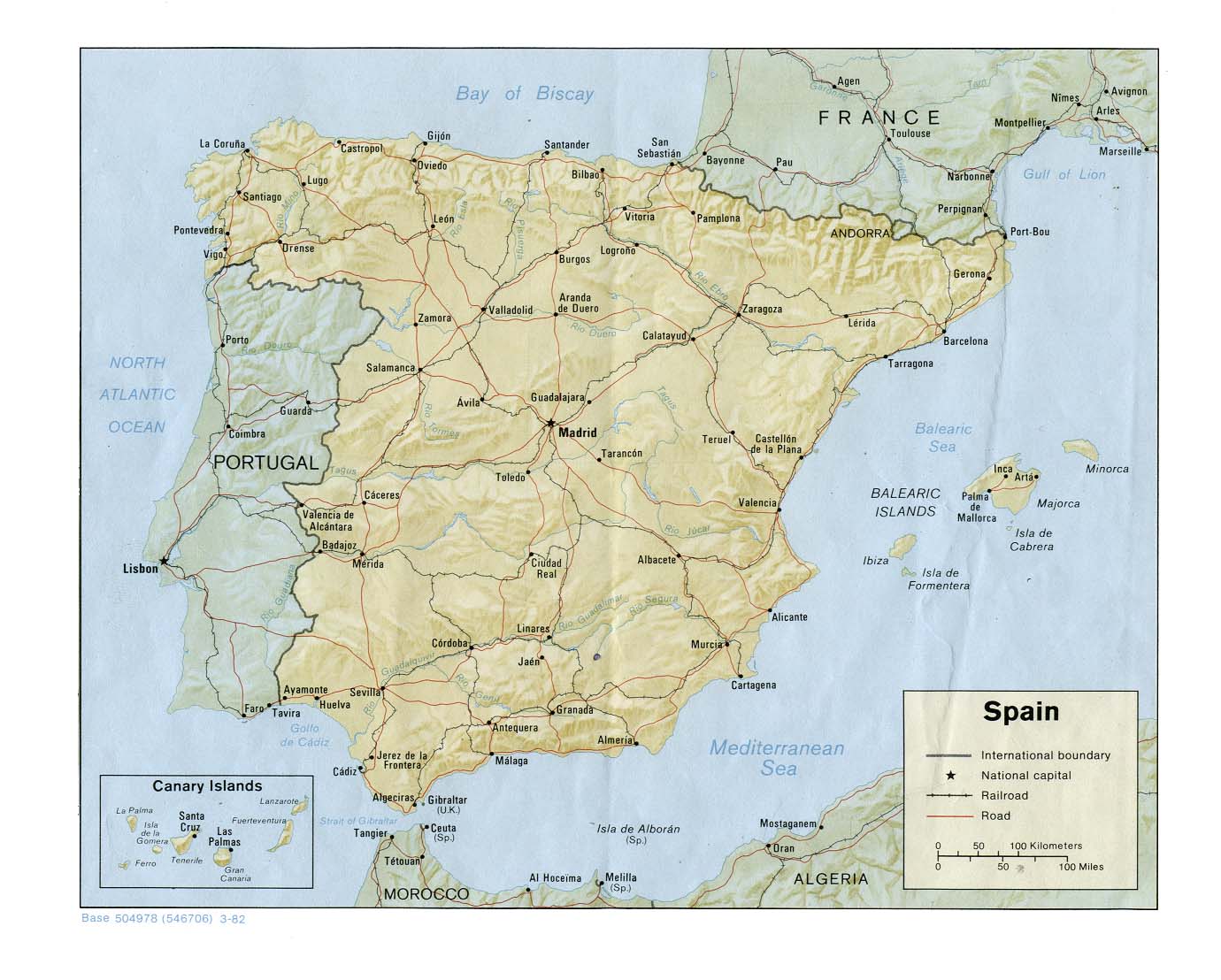
Sometimes it's important to visualize "the prize." You have to love Spain - it's "un pais increible."
Thursday, March 27, 2008
To Bug/Dar La Paliza (Don't Take This Personally, But...)
It has recently been proven by millions of people everywhere that the internet is wasting more people's time today than it ever has in the past.
This little site by BBC is a great example of that fact - and of the fact that wasting time is FUN!
How can you not enjoy learning how to say "Se pasa el dia dandome la paliza en el trabajo"?
Check out the link - and enjoy!
This little site by BBC is a great example of that fact - and of the fact that wasting time is FUN!
How can you not enjoy learning how to say "Se pasa el dia dandome la paliza en el trabajo"?
Check out the link - and enjoy!
Thursday, February 28, 2008
New 3DLanguage Content - La Comida
Yeah! I'm happier than this guy and his music. Sure, we'll both need arthoscopic surgery when we're 40, but hey, life is good now.
Why? Simple - Coccinella is introducing new content, all about one of my favorite subjects. Food!
I'll post the link to the demo when it's done, but I think it is fair to say that 3DLanguage is going to continue to be a great way to learn a foreign language. I use it every day, as you know, and it's working great for me. But don't take my word for it - download it, try it. If you like it use it.
By the way, Coccinella is releasing Arabic and English as a Second Language applications shortly as well.
Monday, February 11, 2008
Spanish - English Dictionary - Online!
Sometimes you want to know how to say a word. Now.
Try this site - if you have a cell phone with a web browser, you now have a neat little translator at your disposal.
Try it!
I just learned that "loser" is perdedor. So ...
Try this site - if you have a cell phone with a web browser, you now have a neat little translator at your disposal.
Try it!
I just learned that "loser" is perdedor. So ...
Thursday, February 7, 2008
Visual Dictionary for Spanish - Another Free Resource
Ah, the smell of free vocabulary practice wafts through the air like freshly brewed coffee, calling me to expand my Spanish repertoire.
Spend 5 minutes with it - it's something new. Repeatability may be low, but I stress again...it's free.
Spend 5 minutes with it - it's something new. Repeatability may be low, but I stress again...it's free.
Wednesday, February 6, 2008
Community Center Classes Are Often Ch...Cost Effective
No matter what tools and techniques you use to learn, it's likely that at some point, you'll want to invest in a class. If you do, definitely check out community centers in your area. In the case of common languages like Spanish, you can often find a 10 week course for under $100.
Although the instruction and curriculum may not be mind-blowing, you'll find yourself with a group of like-minded people you can practice with!
Although the instruction and curriculum may not be mind-blowing, you'll find yourself with a group of like-minded people you can practice with!
Friday, January 25, 2008
Learning is Behavior Change
NPR featured Dr. David Katz, ABC Medical Correspondent and Yale doctor. His topic of discussion was New Year's Resolutions, and how we can improve our chances of keeping them.
You've probably heard that about 3 weeks after a resolution is made, it falls by the way side.
His theory of why that is is rooted in the transtheoretical model of behavior change. Basically, he said, we make resolutions in a moment of inspiration, but we haven't made the preparations necessary to succeed. In other words, we haven't ticked off all the phases in this model.
The phases:
- Precontemplation
- Contemplation
- Preparation
- Action
- Maintenance
I find learning anything to, at its core, be about behavior change. Why?
The answer is simple, and that is because if you want to learn a language, martial art, be a better person, you basically have to change your behavior to achieve that goal.
You've probably heard that about 3 weeks after a resolution is made, it falls by the way side.
His theory of why that is is rooted in the transtheoretical model of behavior change. Basically, he said, we make resolutions in a moment of inspiration, but we haven't made the preparations necessary to succeed. In other words, we haven't ticked off all the phases in this model.
The phases:
- Precontemplation
- Contemplation
- Preparation
- Action
- Maintenance
I find learning anything to, at its core, be about behavior change. Why?
The answer is simple, and that is because if you want to learn a language, martial art, be a better person, you basically have to change your behavior to achieve that goal.
Thursday, January 24, 2008
Tired of present tense? I was...
After you've spoken for a while, you'll get tired of present tense. Quiero tomar algo. No tengo unas aceitunas.
At some point, you want to revel in the past or the future. So here's something I learned today.
Estaba = first or third person form of estar
Estoy adentro de mi casa - I am in my house
Estaba adentro de mi casa - I was in my house
Conjugation covers a lot of ground, and it's difficult to learn just by reading the rules...as I struggle to learn it, I will certainly pass on what I learn.
At some point, you want to revel in the past or the future. So here's something I learned today.
Estaba = first or third person form of estar
Estoy adentro de mi casa - I am in my house
Estaba adentro de mi casa - I was in my house
Conjugation covers a lot of ground, and it's difficult to learn just by reading the rules...as I struggle to learn it, I will certainly pass on what I learn.
Friday, January 18, 2008
Six Great Words To Know - Question Words
Quien = Who
Que = What
Cuando = When
Donde = Where
Como = How
Porque = Why
You can do a lot with these words!
Que = What
Cuando = When
Donde = Where
Como = How
Porque = Why
You can do a lot with these words!
Thursday, January 17, 2008
Making Requests
You must love the internet. There are so many resources out there to take advantage of, it's just silly.
Today, I was thinking about making requests, and I found a little write up on Google Answers (credits to the folks who asked and answered - original link). I found this section most valuable, although it gets into a lot of theory. I put in bold the text most utterly valuable.
Today, I was thinking about making requests, and I found a little write up on Google Answers (credits to the folks who asked and answered - original link). I found this section most valuable, although it gets into a lot of theory. I put in bold the text most utterly valuable.
First, a clarification about the use of "podría". Podría is the verb
"poder", translatable as "can" / "could", "may", "be able", depending
on the context. The desinence "ía" is what gives its conditional
conjugation. But you wouldn't necessarily use this verb to ask
something in the conditional mode:

"¿Podría darme una servilleta?" corresponds exactly to:

"Could I have a napkin?" or "May I have a napkin?" or more literally
"Could you give me a napkin?"

But there is still to consider the equivalent to:

"Would you give me a napkin?" which is:

"¿Me daría una servilleta?" where the conditional form is given by the
desinence "ía" added to the verb "dar" = "to give"

One major difference between English and Spanish is that the latter is
strongly desinencial, so it doesn't need auxiliary verbs to construct
tenses, as English does (in this case, "would"). Now, this conditional
form, ommiting the verb "poder" ("podría", or "podrías" in a
colloquial context) is by large the preferred usage. Still, the form
preceded by the verb poder is not uncommon, as a way to emphasize
politeness.

Also, you can chose to ommit the conditional conjugation:

"¿Me da una servilleta?" The approximate English correspondance would
be: "Do you give me a napkin?", which would not be used in that
situation. Now, in Spanish, this option is at least as much used as
the conditional one, if not more. This one sounds closer to the
imperative form, but it's not it (what would be "Deme una
servilleta").

A slight and curious difference between the usage of the conditional
and non-conditional form for making a request:

"¿Me da una servilleta, por favor?" and "¿Me daría una servilleta?"
sound similarly polite. If you ommit "por favor" (please) in the first
case, you risk to sound a bit impolite (obviously, depending on your
general attitude and tone).

So, we can configure here an increasing scale of politenes:

1. Deme una servilleta. (imperative: mostly rude)
2. Deme una servilleta, por favor = ¿Me da una servilleta? (not
particularly kind, but OK, in the limit depending on you tone)
3. ¿Me da una servilleta, por favor? = ¿Me daría una servilleta?
(polite enough, most used)
4. ¿Me daría una servilleta, por favor? = ¿Podría darme una
servilleta? (particularly polite)
5. ¿Me podría dar una servilleta, por favor? (most polite)

Please take in account that not always the more polite the better,
specially in very colloquial situations where the excess of politeness
would sound affectionate or snob. To walk in the safe side, always use
options 3 or 4 and you'll do OK.
Wednesday, January 16, 2008
Basic Vocabulary Resource
Here's a nice little free web-based resource for you. Covers some basic words, and allows you to click and hear an audio file of the word.
As you know, I practice Spanish every day - and I've found that some basic phrases I use repeatedly:
- Greetings - Such as Hola (hello), Como estas (How are you?), Buenos dias (Good day), Buenas tardes (Good afternoon), and Buenas noches (Good night)
- Basic questions - Donde estas (Where are you?), A donde vas (Where are you going?), Que haces (What are you doing?), Como te sientes (How are you feeling?)
- Basic verbs, you - Tienes (You have___), Quieres (You want____)
- Basic verbs, me - Tengo (I have____), Quiero (I want___)
- Basic verbs, he/she - Tiene (He/she has___), Quiere (He/she wants___)
Practice these, then try using them in conversation - it's actually quite a rush!
As you know, I practice Spanish every day - and I've found that some basic phrases I use repeatedly:
- Greetings - Such as Hola (hello), Como estas (How are you?), Buenos dias (Good day), Buenas tardes (Good afternoon), and Buenas noches (Good night)
- Basic questions - Donde estas (Where are you?), A donde vas (Where are you going?), Que haces (What are you doing?), Como te sientes (How are you feeling?)
- Basic verbs, you - Tienes (You have___), Quieres (You want____)
- Basic verbs, me - Tengo (I have____), Quiero (I want___)
- Basic verbs, he/she - Tiene (He/she has___), Quiere (He/she wants___)
Practice these, then try using them in conversation - it's actually quite a rush!
Tuesday, January 8, 2008
A Free Practice Session
Courtesy of Visual Link, this is a little free lesson. Although I am not impressed with the product, I think it always makes sense to take advantage of something free.
Monday, January 7, 2008
The Secret Sauce to Keeping New Year's Resolutions
You may not go in for New Year's Resolutions. Let's face it, most people don't follow through on them. But I, for one, believe in making them, and I believe that just about everybody has the ability to follow through on them.
As long as you have the secret sauce recipe.
If you've been reading this blog at all, you may have guessed what I regard the secret sauce to be, so I'll just tell you. It's staying on track until your desire becomes a habit.
How long this transformation takes is for the academics to say, but let's just say that no one masters anything in a couple weeks. And when you set out to make something happen (learn Spanish, get a black belt, be nicer to people, grow an awesome beard), it usually isn't a small thing. I don't know anyone who resolves to "have a good day tomorrow" on New Year's Day, but those people are pretty much set.
In truth, as much as many of us are "immediate gratification-oriented" folks, we don't set our sights on immediate things. Because the easily gotten things are common. So they aren't the stuff of resolutions.
So how do you make it through the initial phase of learning? As someone who started with the resolution of "learn Spanish" just last year, I have some thoughts for you:
1) Can You Say "Pit Stop"? Right after defining your big, audacious goal, define some milestones. You need to give yourself a chance to see that you've achieved something after the first few weeks of working. For example, I wanted to be able to say a simple sentence to someone in Spanish in the first couple weeks - one that they understood. Gave me a thrill, kept me going.
2) Fail to Plan, Plan to Fail. It is possible that you can just achieve your goal through brute force - but it sure helps if you have some kind of plan, and you understand how to get there. Of course, this will help define the milestones above. For example, I needed some kind of structure for learning, so I settled on using our 3DLanguage product and some books for 15 minutes every morning (I also had to resolve to get up at the "crack of donut" in order to be sure I had uninterrupted time). A friend of mine uses a technique Jerry Seinfeld pioneered (I guess?) for tracking his progress, by marking his daily practice on a calendar, and trying not to break the chain. Hey, whatever works.
3) Focus on the Benefits. Write down the why behind your goal, and keep it posted. Personally, I think learning Spanish will make me cooler. Yup, I said it - and I'm sticking to that reason (actually, I'm kidding. Sort of). So I keep that in the forefront of my mind. And posted at my desk.
4) Incorporate Your Resolution into Your Definition of Yourself. The managing director of a consulting firm I once worked for told me, "If you want to be a great senior consultant, the first thing you need to do is go buy yourself a good suit, pen, and shoes. Dress the part. Pretty soon you'll start acting like a great senior consultant, and after a few years, you'll be one." As strange as it sounds, there's something to this. High performing athletes visualize themselves successfully completing high jumps, touchdown passes, etc. Why not you? We let things outside ourselves define who we are all the time. So use this to your advantage. For me, not just practicing Spanish but speaking it to my family was the key. I'm a Spanish speaker...very possibly a sub-kindergarten Spanish speaker, but in a while...
Bottom line, don't shy away from the resolutions! Set your sights high, and give yourself a chance to succeed. You can do it!
As long as you have the secret sauce recipe.
If you've been reading this blog at all, you may have guessed what I regard the secret sauce to be, so I'll just tell you. It's staying on track until your desire becomes a habit.
How long this transformation takes is for the academics to say, but let's just say that no one masters anything in a couple weeks. And when you set out to make something happen (learn Spanish, get a black belt, be nicer to people, grow an awesome beard), it usually isn't a small thing. I don't know anyone who resolves to "have a good day tomorrow" on New Year's Day, but those people are pretty much set.
In truth, as much as many of us are "immediate gratification-oriented" folks, we don't set our sights on immediate things. Because the easily gotten things are common. So they aren't the stuff of resolutions.
So how do you make it through the initial phase of learning? As someone who started with the resolution of "learn Spanish" just last year, I have some thoughts for you:
1) Can You Say "Pit Stop"? Right after defining your big, audacious goal, define some milestones. You need to give yourself a chance to see that you've achieved something after the first few weeks of working. For example, I wanted to be able to say a simple sentence to someone in Spanish in the first couple weeks - one that they understood. Gave me a thrill, kept me going.
2) Fail to Plan, Plan to Fail. It is possible that you can just achieve your goal through brute force - but it sure helps if you have some kind of plan, and you understand how to get there. Of course, this will help define the milestones above. For example, I needed some kind of structure for learning, so I settled on using our 3DLanguage product and some books for 15 minutes every morning (I also had to resolve to get up at the "crack of donut" in order to be sure I had uninterrupted time). A friend of mine uses a technique Jerry Seinfeld pioneered (I guess?) for tracking his progress, by marking his daily practice on a calendar, and trying not to break the chain. Hey, whatever works.
3) Focus on the Benefits. Write down the why behind your goal, and keep it posted. Personally, I think learning Spanish will make me cooler. Yup, I said it - and I'm sticking to that reason (actually, I'm kidding. Sort of). So I keep that in the forefront of my mind. And posted at my desk.
4) Incorporate Your Resolution into Your Definition of Yourself. The managing director of a consulting firm I once worked for told me, "If you want to be a great senior consultant, the first thing you need to do is go buy yourself a good suit, pen, and shoes. Dress the part. Pretty soon you'll start acting like a great senior consultant, and after a few years, you'll be one." As strange as it sounds, there's something to this. High performing athletes visualize themselves successfully completing high jumps, touchdown passes, etc. Why not you? We let things outside ourselves define who we are all the time. So use this to your advantage. For me, not just practicing Spanish but speaking it to my family was the key. I'm a Spanish speaker...very possibly a sub-kindergarten Spanish speaker, but in a while...
Bottom line, don't shy away from the resolutions! Set your sights high, and give yourself a chance to succeed. You can do it!
Subscribe to:
Posts (Atom)